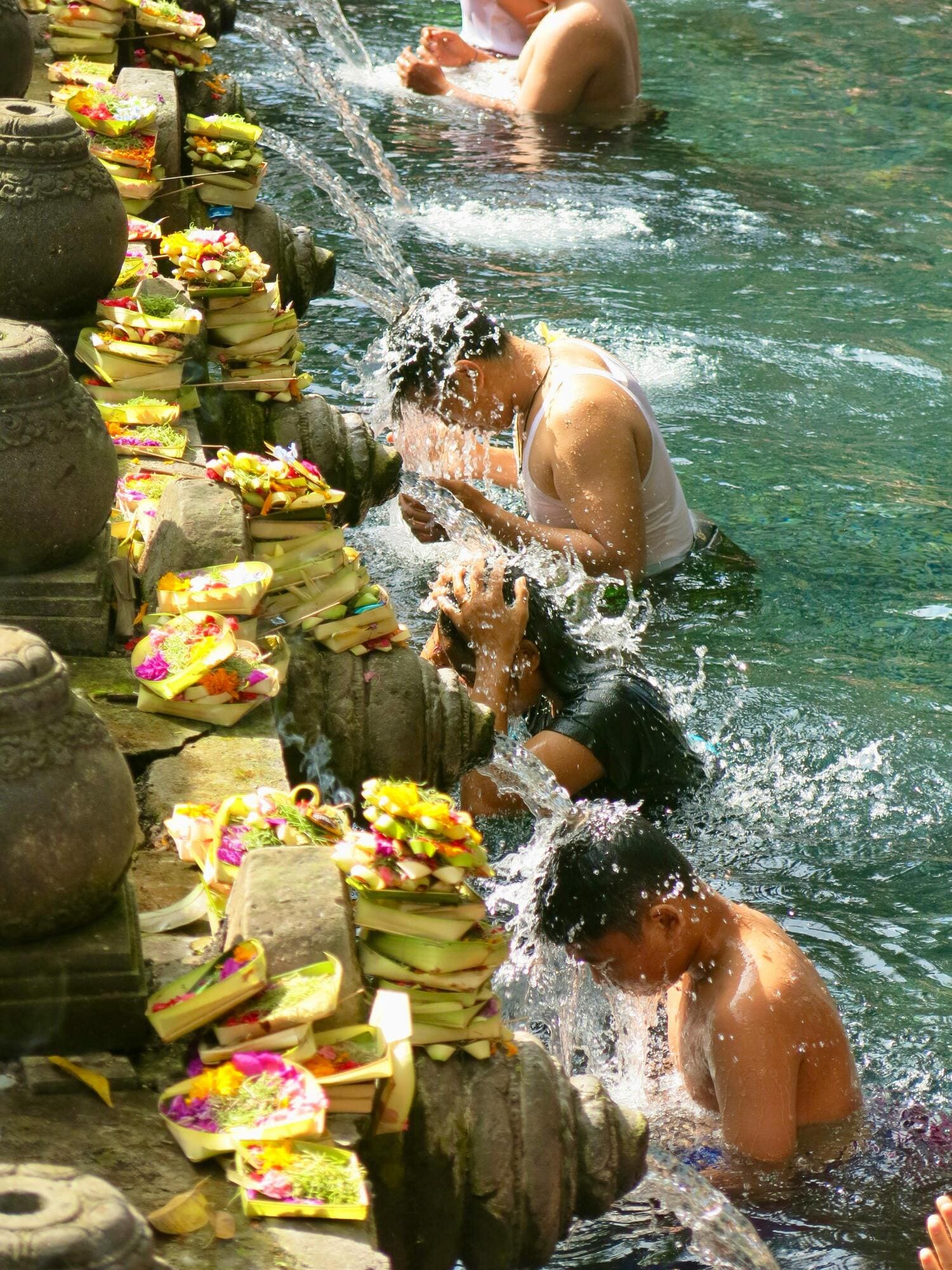
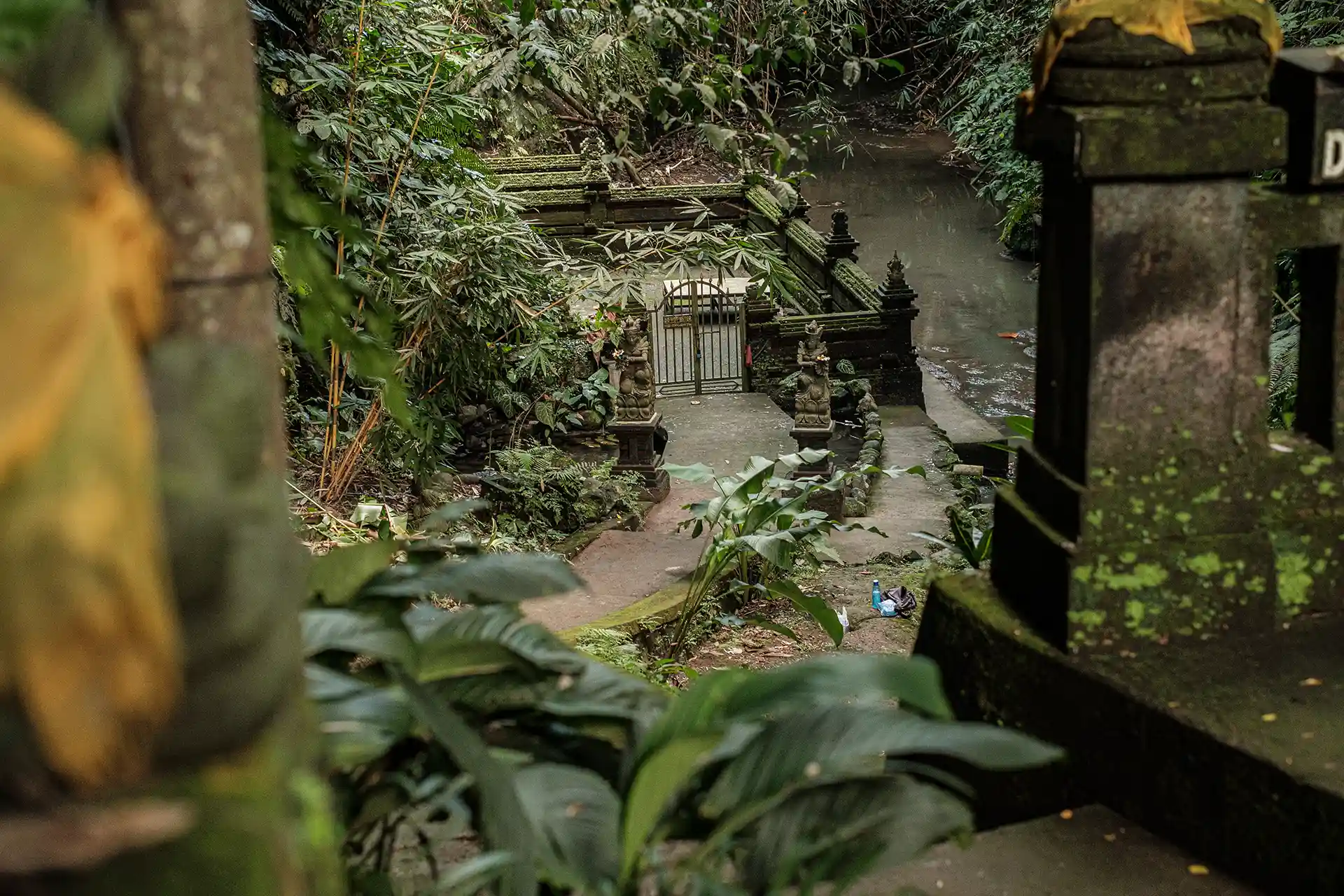
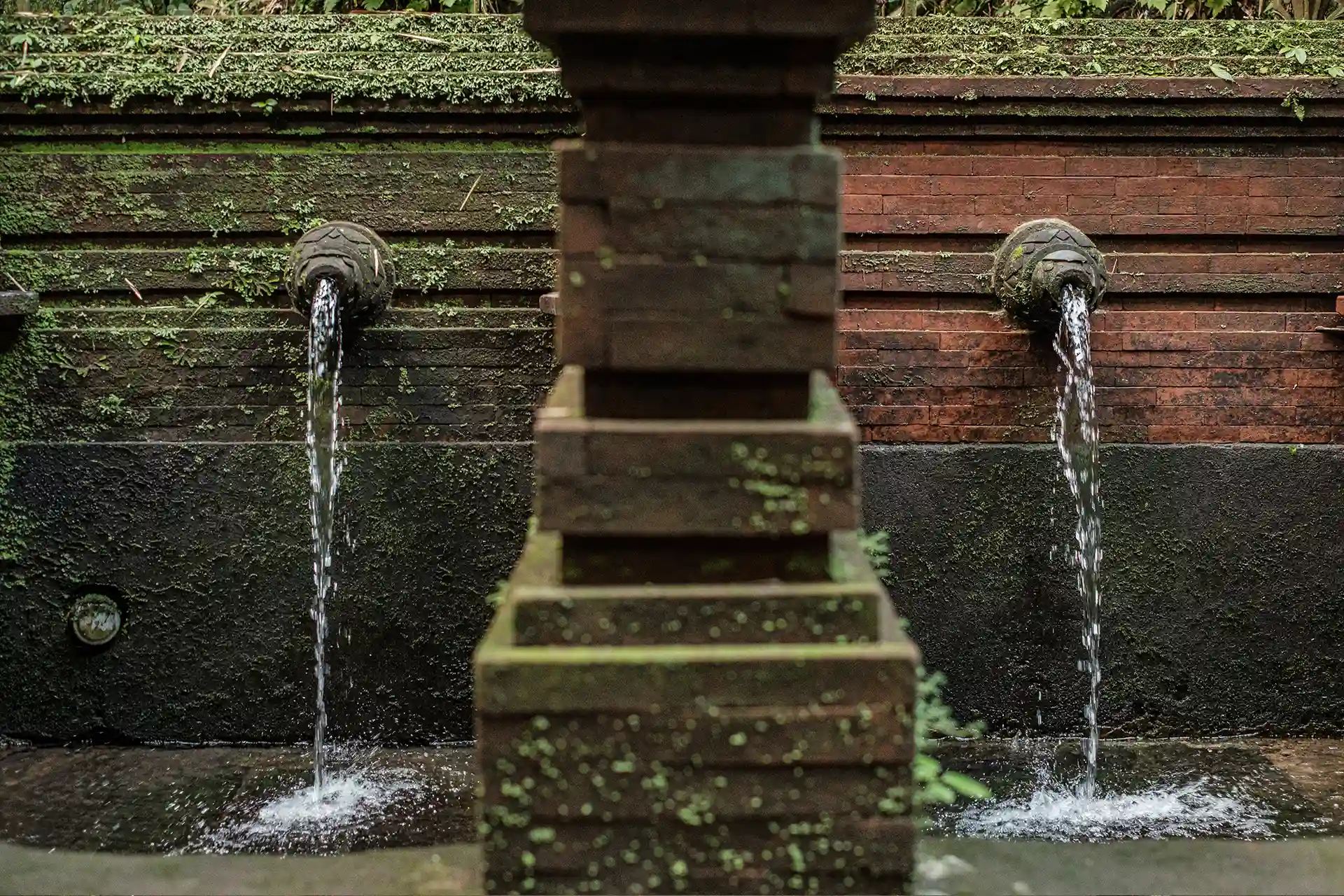
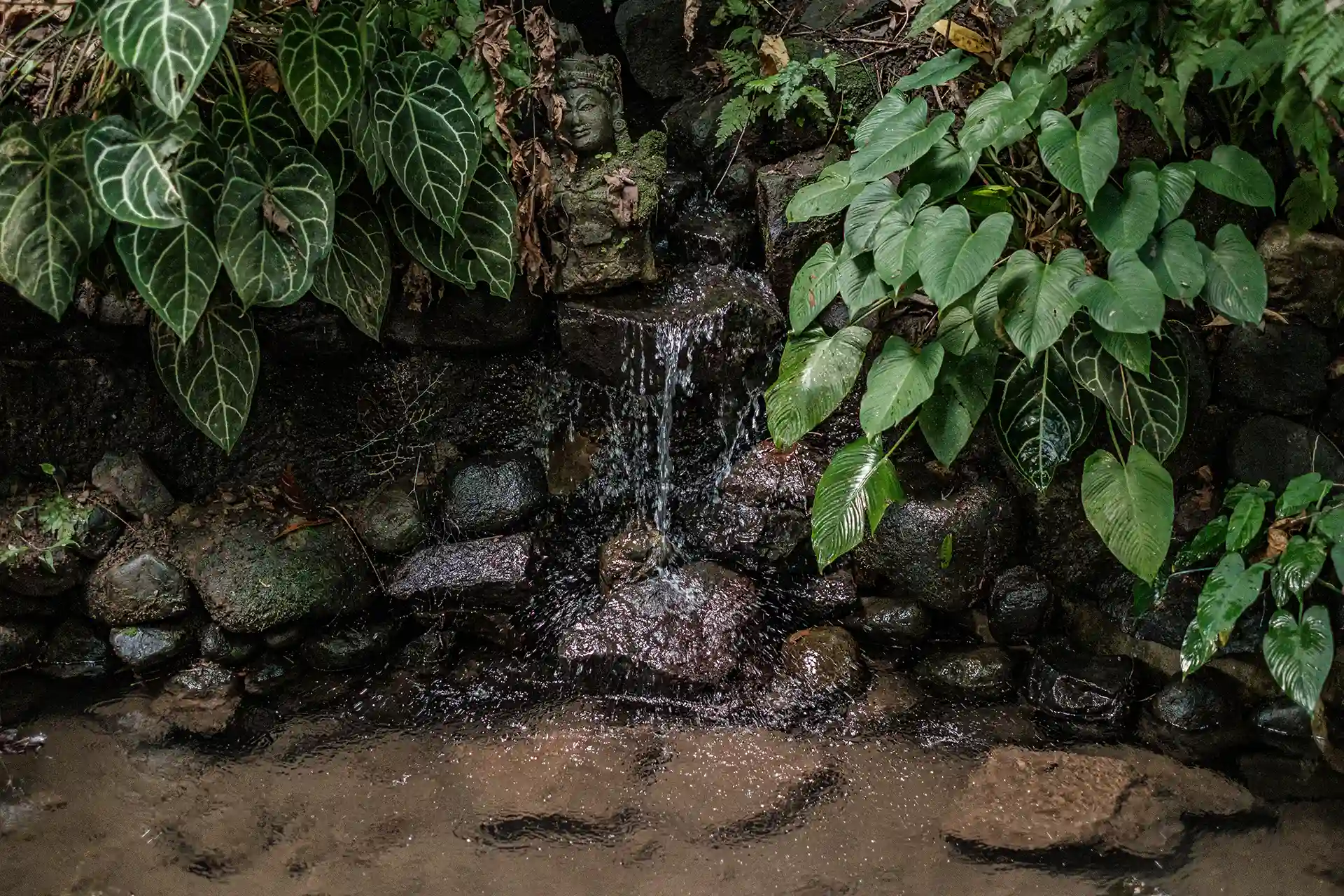
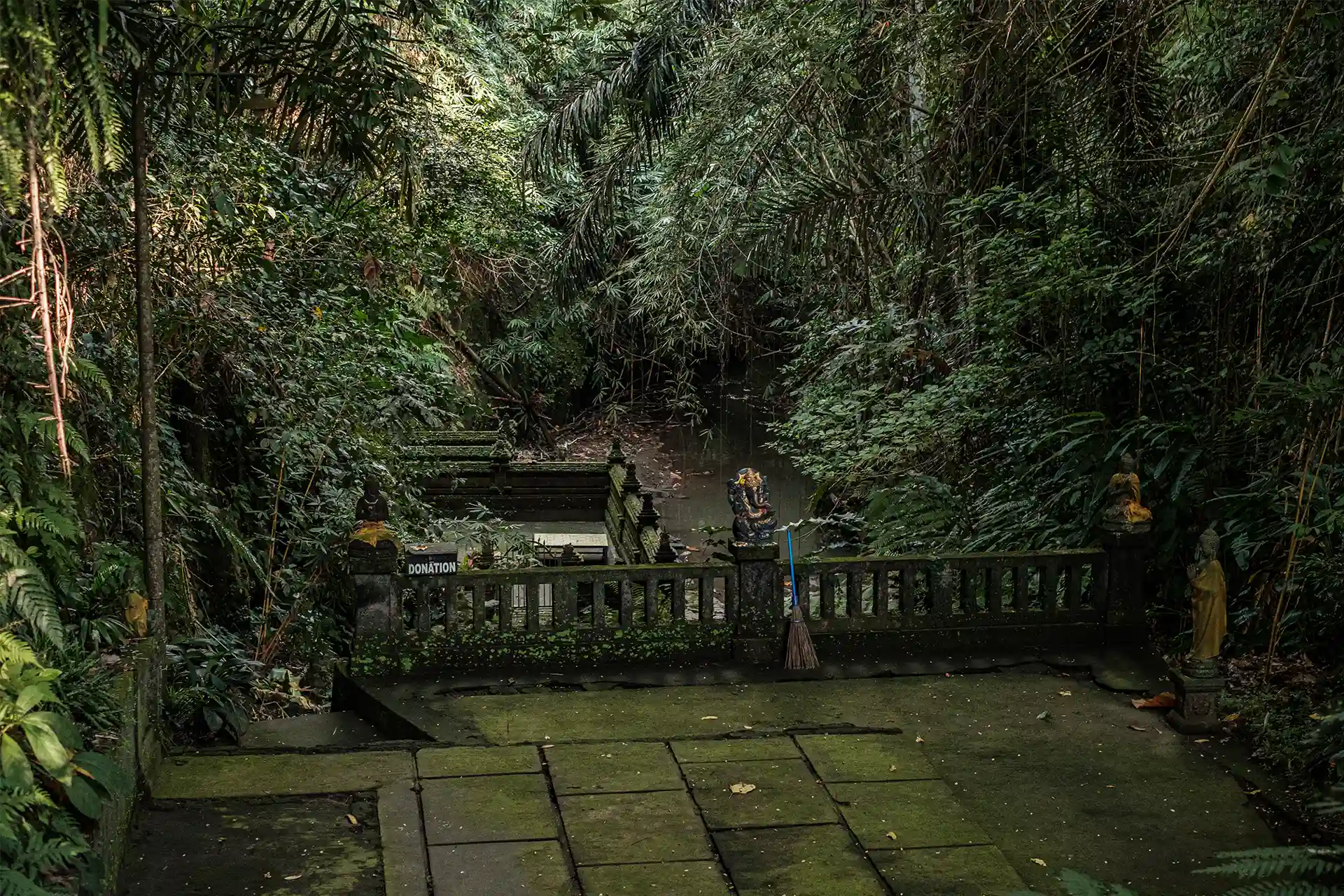
In the Balinese Hindu tradition, Tirta means sacred water. But not just any water. Tirta is born when water is taken from a natural source, perhaps a spring hidden deep in the forest or a stream flowing beneath ancient temples and then blessed through a ritual.
This act transforms it. What was once ordinary becomes something extraordinary. A vessel of spirit. A whisper from the divine.
Tirta is used in almost every sacred ritual in Bali, from the smallest home ceremony to grand temple festivals. It’s more than a symbol. It’s a spiritual tool, something that purifies, sanctifies, and reconnects us with the invisible world.
Ritual, Offering, and the Language of Water
In Balinese culture, every prayer is a dialogue. Between humans and gods. Between this world and the next. And Tirta is the language that carries those prayers.
Before someone prays, Tirta is sprinkled on their body to purify the mind, words, and actions what Balinese call bayu, sabda, idep. After the prayer, they drink it. They touch it to their face. Not just as tradition but as surrender.
Because to receive Tirta is to say:
“I am open.”
“I am listening.”
“I am ready to be in harmony again.”
Types of Tirta: When Water Becomes a Message
Not all Tirta is the same. Just like moments in life, each kind carries its own intention, its own prayer.
- Tirta Pembersihan is used before prayer, to cleanse the self and the sacred offerings.
- Tirta Penglukatan for deep purification, to release emotional and spiritual burdens.
- Tirta Wangsuhpada is given after prayer, a symbol of gratitude and divine blessing.
- Tirta Pemanah & Penembak used in funeral rites, to gently cleanse the body before the spirit journeys on.
- Tirta Pengentas is a sacred water that helps release the soul from worldly ties, so it may move toward the light.
Each drop of Tirta is a step toward balance. A reminder that we are never alone. That there is always something watching, guiding, and blessing us, if only we are still enough to notice.